

As the weather warms and the days grow longer, many people naturally become more active. Spring often means walking more, gardening, hiking, running, or simply spending more time outside. While increased activity is great for overall health, it can also place extra stress on your feet if you’re not prepared.
Your feet carry you through thousands of steps each day. In fact, the average person walks about 100,000 miles in a lifetime [1]. Healthy feet are essential for staying active, preventing pain, and maintaining mobility. This spring, give your feet the attention they deserve. With a few simple habits, you can help keep them comfortable, strong, and pain-free throughout the season.
Why Foot Health Matters
Your feet are complex structures made up of 26 bones, 33 joints, and more than 100 muscles, tendons, and ligaments [2]. They absorb impact, support your body weight, and allow you to move efficiently. When foot health is neglected, problems can develop, including:
- Heel pain or plantar fasciitis
- Arch pain or fallen arches
- Bunions and hammertoes
- Blisters and calluses
- Ingrown toenails
- Achilles tendon irritation
- Stress fractures
Small issues can quickly become bigger concerns if ignored. Fortunately, many common foot problems can be prevented with proper care and attention [3].
Tip #1: Choose the Right Shoes
Spring activities often mean switching footwear—lighter shoes, sandals, or athletic shoes. Poorly fitting footwear is one of the most common causes of foot pain [4].
Look for shoes that:
– Fit comfortably with room for your toes
– Provide proper arch support
– Have cushioning to absorb impact
– Offer stability around the heel
Avoid shoes that:
– Are too tight or narrow
– Have worn-out soles
– Provide minimal support (such as thin flip-flops)
If you plan to increase walking or exercise this spring, make sure your shoes are in good condition. Many athletic shoes need replacement every 300–500 miles of use [5].
Tip #2: Ease Into Spring Activity
After winter, many people increase their activity levels quickly. This sudden change can place stress on muscles, tendons, and joints in the feet. Instead, build activity gradually:
• Start with shorter walks
• Increase distance or intensity slowly
• Allow rest days between strenuous activities
• Stretch before and after exercise
A common recommendation is to increase activity by no more than 10% per week to reduce injury risk [6].
Tip #3: Stretch Your Feet and Calves
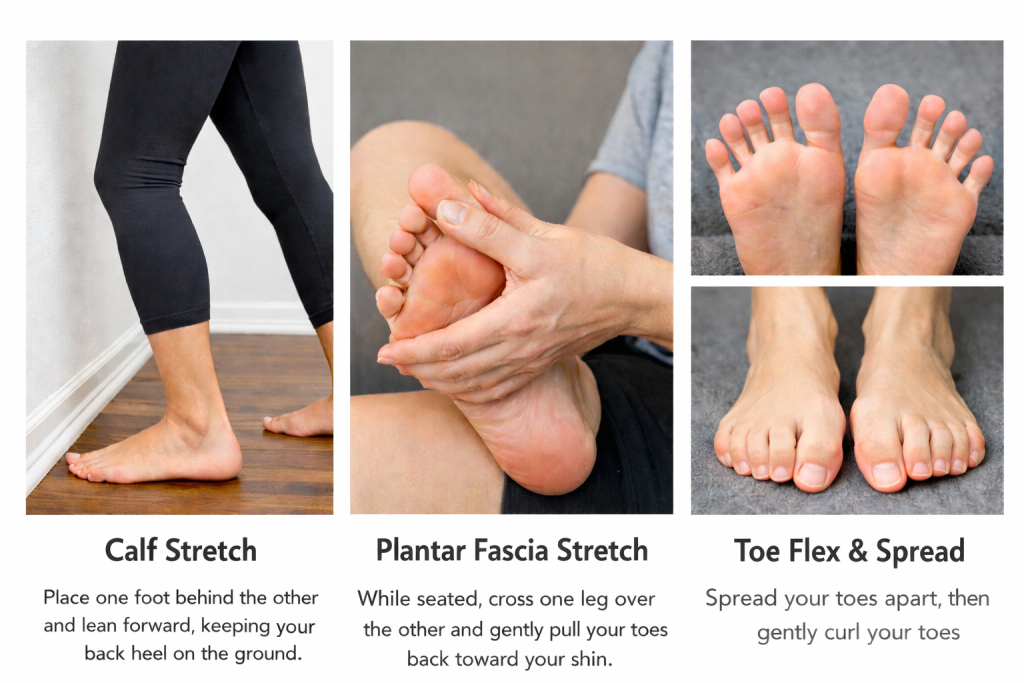
Tight muscles in the calves and feet can contribute to heel pain and other injuries. Try these simple stretches daily:
Calf Stretch
Stand facing a wall. Place one foot behind the other and lean forward gently while keeping your back heel on the ground. Hold for 20–30 seconds.
Plantar Fascia Stretch
While seated, cross one leg over the other and gently pull your toes back toward your shin until you feel a stretch along the bottom of your foot.
Toe Flex and Spread
Spread your toes apart, then gently curl them. Repeat several times to strengthen the small muscles in your feet.
These exercises help keep your feet flexible and prepared for increased activity [7].
Tip #4: Pay Attention to Early Warning Signs
Foot pain should not be ignored. Early attention to symptoms can help prevent more serious problems. Watch for signs such as:
• Persistent heel pain
• Swelling
• Numbness or tingling
• Redness or warmth
• Pain during walking or activity
If pain continues for several days or interferes with daily activity, it may be helpful to seek professional guidance [3].
Tip #5: Protect Your Feet During Outdoor Activities
Spring brings many opportunities to enjoy the outdoors, but different activities require proper foot protection.
Gardening – Wear sturdy shoes to protect against sharp tools, rocks, or uneven ground.
Walking or Hiking – Choose supportive walking shoes and be mindful of uneven surfaces.
Yard Work – Avoid working barefoot to reduce the risk of cuts, splinters, or injuries.
Simple precautions help keep outdoor activities safe and comfortable [4].
Additional Tips
Some additional healthy foot habits include (1) washing feet daily with soap and water; (2) drying carefully between toes; (3) changing socks regularly; (4) wearing breathable footwear; and (5) moisture-wicking socks can be especially helpful if you’re spending time outdoors or exercising [8].
So lace up your shoes, step outside, and enjoy the season—your feet will thank you.
©2026ProgressiveHealth
References
1. American Podiatric Medical Association. Foot Health Facts.
2. National Institutes of Health. Foot and Ankle Structure and Function.
3. American Orthopaedic Foot & Ankle Society. Foot Care Guidelines.
4. American Podiatric Medical Association. Proper Footwear Recommendations.
5. American Academy of Sports Medicine. Athletic Shoe Replacement Guidelines.
6. American College of Sports Medicine. Physical Activity Progression Recommendations.
7. American Orthopaedic Foot & Ankle Society. Stretching Exercises for Foot Health.
8. Centers for Disease Control and Prevention. Foot Hygiene and Skin Care.